




Steel Billets in 2025: An Overview of Iran and the Global Market
Steel billet is one of the most important semi-finished products in the steel production chain and serves as a raw material for manufacturing rebar, steel beams, angles, channels, sheets, and other steel sections. In 2025, steel billets continued to play a key role in the construction, automotive, oil and gas, and infrastructure sectors, while their market was influenced by both domestic and international factors.
What Is a Steel Billet?
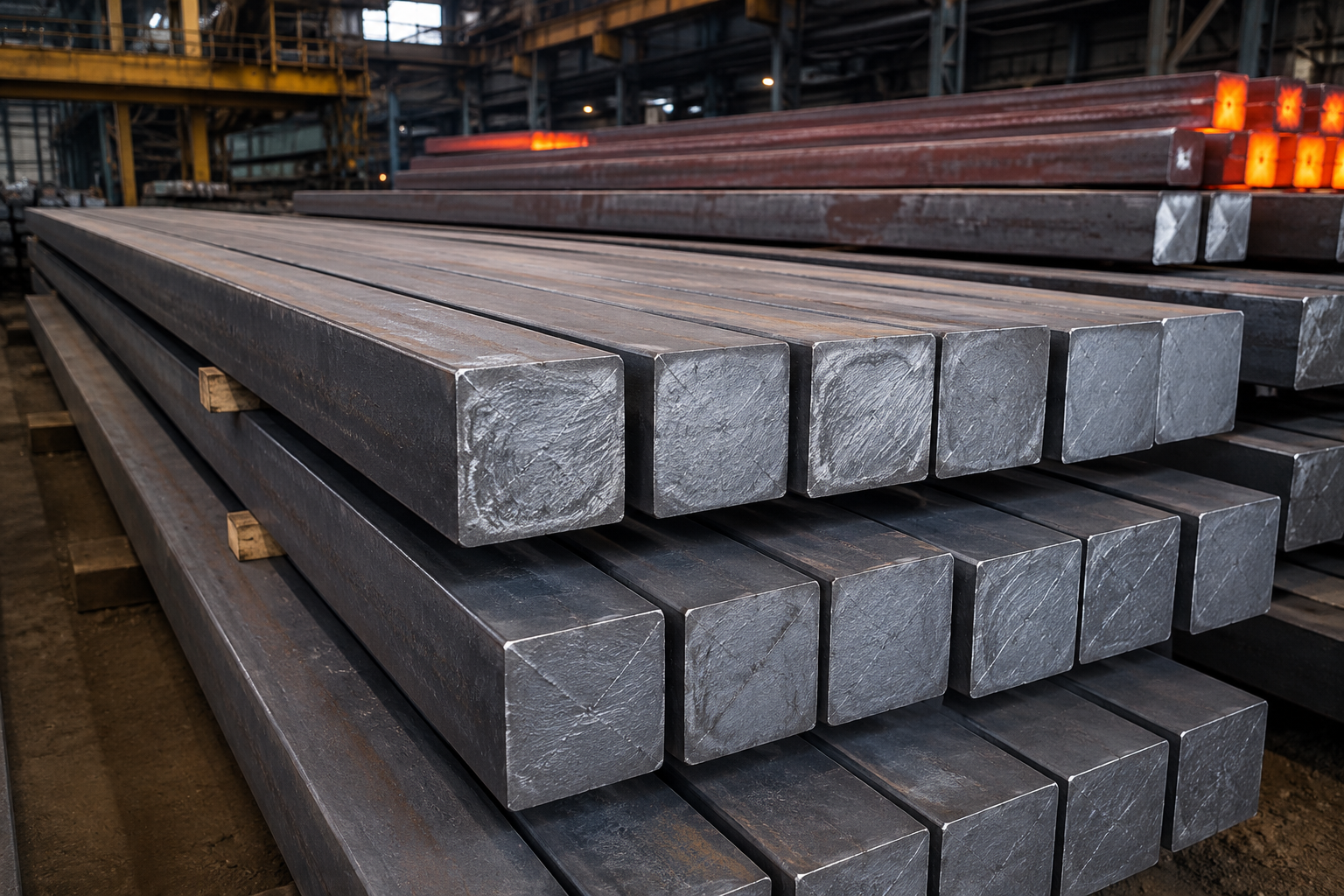
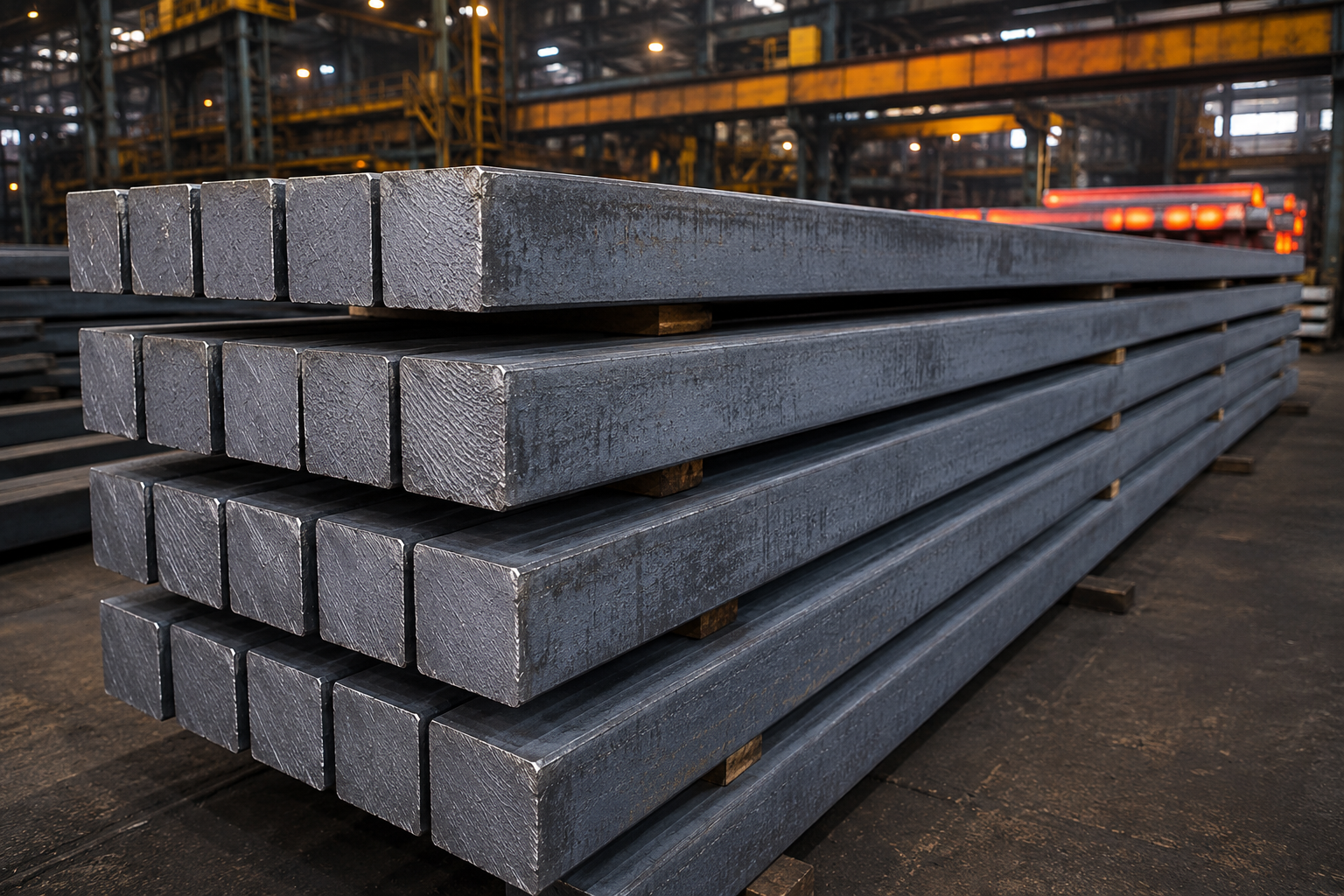
Steel billet is a semi-finished steel product produced by melting direct reduced iron, scrap, or pig iron in electric arc or induction furnaces. Following the continuous casting process, billets are transferred to rolling mills, where they are processed into various steel products.
The main characteristics of steel billets include:
- High strength and quality
- Good formability
- Suitable for producing various steel sections
- Easy transportation and storage
Iran's Steel Billet Production in 2025
Iran remains among the world's top 10 steel-producing countries, with a significant portion of its steel production consisting of semi-finished products such as billets, blooms, and slabs. In 2025, despite electricity and natural gas restrictions, rising production costs, and fluctuations in global markets, Iran's steel industry continued to maintain substantial production capacity.
According to statistics published by the Iranian Steel Producers Association, more than 30 million tons of semi-finished steel products (billets and slabs) were produced in Iran in 2024. This volume serves as an important basis for the operations of steelmaking units in 2025. A significant share of these products was also allocated to export markets across Asia, the Middle East, and North Africa.
Global Steel Billet Market in 2025
The global steel billet market in 2025 was influenced by several important factors, including:
- Slower growth in China's construction sector
- Increased investment in infrastructure projects in India and Southeast Asian countries
- Fluctuations in energy and raw material prices
- Environmental policies and efforts to reduce carbon emissions in the steel industry
Global steel demand was expected to experience moderate growth in 2025, with developing economies continuing to serve as major drivers of steel consumption. This trend could create opportunities for increasing Iranian steel billet exports.
Challenges Facing the Steel Billet Industry
Steel billet producers in Iran faced several challenges in 2025, including:
- Electricity and natural gas supply restrictions during peak consumption periods
- Rising transportation and logistics costs
- Fluctuations in exchange rates and raw material prices
- Intense competition in export markets
- Changes in global steel prices
Despite these challenges, investment in production infrastructure, optimization of energy consumption, and the adoption of modern technologies can help improve the competitiveness of Iran's steel industry and strengthen its position in regional and international markets.